One of the most common questions parents ask is when their child should first visit an orthodontist. The American Association of Orthodontists recommends an initial evaluation by age 7.
This may sound early, but the goal is not always to start treatment. Instead, early evaluation allows orthodontists to identify developing problems while the jaw and permanent teeth are still forming.
Why Age 7 Matters
By around age 7, enough permanent teeth have erupted for an orthodontist to detect issues such as crowding, crossbite, or jaw growth discrepancies. Early awareness allows for better long-term planning.
In many cases, no immediate treatment is needed. Children may simply be monitored periodically until the ideal time for braces or aligners.
Signs Your Child Should Be Evaluated
Parents in Charlottesville should consider an orthodontic evaluation if they notice:
- Crowded or overlapping teeth
- Early or late loss of baby teeth
- Mouth breathing
- Difficulty chewing
- Jaw shifting or clicking
- Protruding front teeth
Even if none of these are obvious, a screening exam provides valuable peace of mind.
The Benefit of Early Orthodontic Monitoring
Early evaluation helps avoid surprises later and allows families to plan financially and logistically. When treatment is recommended at the proper time, it is often more efficient and predictable.
At Suzanne M. Dennis DDS Orthodontics, early evaluations are designed to be informative and low pressure, helping parents understand exactly what—if anything—their child may need in the future.
If you came for the quick answer, you have it—and you can stop here: plan your child’s first orthodontic evaluation by age 7, come sooner if you notice one of the signs above, and remember that an evaluation does not mean your child will need treatment. If your child is already older than 7, do not worry. It is not too late to schedule a first visit.
If your child is approaching 7 or has never had an orthodontic evaluation, you can request a FREE consultation with Dr. Suzanne Dennis. You may leave knowing that everything is developing normally. If something deserves attention, you will be glad to understand it while useful options are still available.
- --
Want to understand more? Let’s take a closer look.
The first part of this article gives most parents everything they need to know. But if you are wondering why age 7 is recommended, what an orthodontist can see that may not be obvious at home, or what “monitoring” really means, the sections below drill down into each of those questions.
A Closer Look at Why Age 7 Matters
At around 7, most children are in what orthodontists call the mixed-dentition stage. They have a combination of baby teeth and permanent teeth. The first permanent molars and front teeth are often establishing the bite, while many other permanent teeth are still developing and preparing to come in.
That makes this age especially informative. Dr. Dennis is not looking only at whether the front teeth appear straight. She is looking at the larger picture:
- How do the upper and lower teeth fit together?
- Are the jaws developing in reasonable balance?
- Does the lower jaw slide to one side when the child closes?
- Is there likely to be adequate space for the permanent teeth?
- Are permanent teeth appearing in an expected order and position?
- Are prominent teeth at greater risk of being injured?
- Could an oral habit or functional pattern be influencing development?
- Is anything affecting chewing, comfort, dental health, facial balance, or confidence?
This is why a child can have front teeth that look reasonably straight and still benefit from an evaluation. Bite and jaw-development concerns are not always easy for a parent to see. The reverse is also true: teeth may look crowded or uneven during a normal transitional stage without creating a reason to begin treatment.
The purpose of the visit is not to search for something wrong. It is to replace uncertainty with an informed answer.
Does an evaluation at 7 mean braces at 7?
No. An early evaluation and early treatment are two very different things.
After examining a child, Dr. Dennis will usually recommend one of three paths:
- Everything is developing well. No treatment is needed, and another orthodontic visit may not be necessary unless something changes.
- Nothing needs to be done now, but development should be watched. Dr. Dennis may check the child periodically as permanent teeth arrive and the jaws continue to grow. This helps her recommend treatment only if it becomes useful and at the age when it makes the most sense.
- A specific problem may benefit from attention during growth. A smaller group of children has a bite, jaw-width, growth, or eruption concern for which timing could make a meaningful difference. If early treatment is recommended, Dr. Dennis will explain what she sees, why she would treat it now, and what could reasonably happen if the family waits.
Good early orthodontic care is not about treating every child early. It is about recognizing which children are better served by waiting and which children have a time-sensitive opportunity worth discussing.
For a fuller explanation of this distinction, read Early Orthodontic Treatment: Why Timing Can Change the Result.
A Closer Look at the Signs Parents May Notice
The list near the beginning is a useful screening guide, but each sign can mean different things. Seeing one does not prove that your child needs braces. It simply gives you a good reason to ask an orthodontist for an opinion.
Crowded or overlapping teeth
Crowding can occur because of tooth size, available space, the shape and width of the dental arches, the position of developing teeth, or a combination of factors. Sometimes the sensible plan is to wait and see how the remaining teeth erupt. In other cases, crowding is part of a jaw-width or eruption problem that deserves earlier attention.
If you want a broader list of clues, see 7 Key Indicators That Your Child May Need Braces.
Early, late, or uneven loss of baby teeth
Children do not all lose teeth on exactly the same schedule, so normal variation is expected. The overall pattern is often more informative than the child’s exact age.
A baby tooth lost early because of decay, injury, or another tooth’s eruption may allow nearby teeth to move into the space. A baby tooth that remains much longer than its matching tooth on the other side may suggest that the permanent tooth beneath it is delayed, missing, blocked, or following an unusual path. Often the finding simply needs observation; occasionally it changes how the child’s dental development should be managed.
Mouth breathing, tongue posture, or a mouth-open resting position
One thing that surprises many parents is how much attention an orthodontist gives to things other than teeth. Dr. Dennis may notice whether a child’s lips rest together comfortably, how the tongue is positioned, and whether the child tends to breathe through the mouth.
The tongue, lips, and cheeks apply light forces repeatedly throughout the day. During growth, those patterns may influence the position of the teeth and the development of the dental arches. You can explore that connection in Your Tongue Is Stronger Than You Think—and Your Teeth Know It and How Mouth Breathing Affects Jaw Development.
Orthodontists evaluate the dental and jaw patterns that may accompany mouth breathing; they do not replace a pediatrician, sleep physician, allergist, or ear, nose, and throat specialist. If your child snores regularly, struggles to breathe during sleep, or has pauses in breathing, discuss that with your child’s medical provider as well.
Difficulty chewing, a jaw shift, or teeth that do not meet normally
A comfortable bite should allow a child to chew without routinely catching the cheek, sliding the jaw to one side, or struggling to bring the front teeth together.
A crossbite occurs when an upper tooth or group of upper teeth bites inside the lower teeth. In some children, this causes the lower jaw to shift as the teeth come together. A narrow upper jaw can be one reason this happens. When expansion is appropriate, growth may provide an especially useful time to guide the upper jaw. That does not mean every crowded child needs an expander; diagnosis, facial proportions, growth direction, and long-term stability all matter. Learn more in Understanding the Benefits of Palatal Expanders for Your Child’s Dental Development.
An underbite, deep bite, or open bite may also be primarily dental, primarily related to jaw growth, or a combination of the two. Understanding the cause is more important than applying a label.
Protruding front teeth
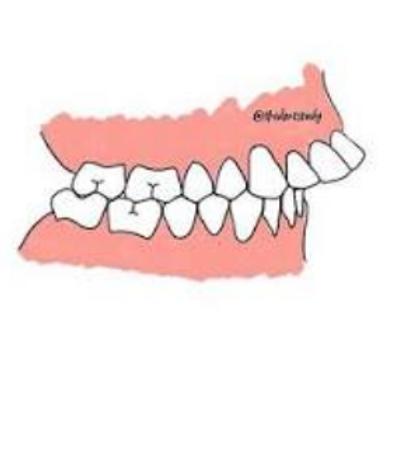
Upper front teeth that sit well ahead of the lower teeth may be more exposed to accidental injury. They can reflect the position of the teeth, the relationship between the jaws, an oral habit, or several factors together.
Age and remaining growth can influence the available treatment choices, but that still does not mean every child with prominent front teeth should be treated immediately. Dr. Dennis first determines what is creating the relationship and whether there is a benefit to acting now or watching growth. For a deeper explanation, read Class II Correction: When the Upper Teeth Sit Too Far Ahead.
A smile concern your child brings to you
Children should never be made to feel that there is something “wrong” with their face or smile. At the same time, it is worth listening if a child begins covering the mouth, avoiding photographs, or saying that a tooth or bite is bothering them.
Sometimes reassurance is enough. Sometimes a child would benefit from treatment at the appropriate time. An orthodontic consultation can make room for that conversation without criticizing the child’s appearance or creating a problem where none exists. The goal is a healthy, functional smile the child can feel comfortable sharing—not someone else’s idea of perfection.
A Closer Look at Orthodontic Monitoring
“Let’s watch it” can sound vague to a parent, but thoughtful monitoring is an active clinical decision.
As a child grows, Dr. Dennis may be watching:
- whether permanent teeth continue to erupt on a healthy path;
- whether adequate space is developing or disappearing;
- whether a bite or jaw difference is improving, remaining stable, or becoming more pronounced;
- whether the right and left sides are developing symmetrically;
- whether a baby tooth is being lost at an appropriate time; and
- whether the child is approaching a stage when treatment would become more efficient or predictable.
Observation allows Dr. Dennis to avoid beginning too soon while also reducing the chance of missing a helpful treatment window. It gives parents time to understand possible future care, consider insurance and payment options, and plan around school, activities, and family schedules.
If treatment never becomes necessary, monitoring has still done its job. The family receives reassurance based on professional observation rather than hope or guesswork.
What is two-phase treatment—and does every child need it?
Two-phase orthodontic treatment separates care into an early phase during growth and a later phase, if needed, after more permanent teeth have arrived. The early phase should address a clear developmental or functional problem; it is not simply a head start on cosmetic straightening.
Not every child needs two phases. Some children are best treated once in the teen years. Some may benefit from focused early care followed by observation, and some will need a later phase to finish aligning the permanent teeth and bite. The recommendation should be based on your child’s needs, not a standard schedule. Read more in The Benefits of Two-Phase Orthodontic Treatment for Your Child’s Smile.
What Happens at the First Visit With Dr. Dennis?
The first visit is designed to be comfortable, informative, and useful—even when the answer is that nothing needs to be done.
Dr. Dennis begins by listening to any concerns you, your child, or your dentist may have. She examines the teeth, bite, jaw relationships, facial balance, available space, and stage of dental development. When diagnostic records are appropriate, they can provide additional information about teeth and structures that are not visible in the mouth.
Most importantly, Dr. Dennis explains what she sees in plain language. You should leave understanding:
- whether there is an orthodontic or orthopedic concern;
- whether anything would benefit from attention now;
- whether watching and waiting is the wiser plan;
- what changes Dr. Dennis would monitor; and
- when another evaluation may be useful.
The consultation is not a commitment to braces. It is an opportunity to get an experienced opinion and a sensible plan.
What If My Child Is Already Older Than 7?
Age 7 is a recommended checkpoint, not an expiration date. If your child is 8, 10, 12, or already a teenager, there is no reason to feel that you have missed your chance.
Children grow and lose teeth at different rates, and many begin orthodontic treatment after most of their permanent teeth have arrived. An evaluation now can still tell you what is happening, what choices are available, and what timing makes the most sense from this point forward.
A Preventive Visit With a Reassuring Purpose
Parents take children for routine medical, vision, and dental checks even when nothing appears to be wrong. A first orthodontic evaluation follows the same preventive idea.
Dr. Dennis may confirm that your child’s teeth and jaws are developing beautifully and no treatment is needed. She may identify something to watch so your family is not surprised later. Or she may find a less common problem for which attention during growth could make an important difference to dental health, jaw development, function, tooth protection, facial balance, or confidence.
None of those outcomes should feel frightening. They are all useful answers.
If your child is approaching 7, is already older and has never been evaluated, or has a sign that makes you curious, schedule a FREE consultation with Dr. Suzanne Dennis or call 434-973-4446.
You are not assuming that your child needs treatment. You are simply giving Dr. Dennis the opportunity to check—and giving yourself the peace of mind that comes from knowing.