An eight-year-old with a narrow upper jaw and a twelve-year-old with a narrow upper jaw may appear to have the same orthodontic problem. But from my perspective, they aren't necessarily the same problem at all.
At eight, I may be able to use the child's growth to widen the developing upper jaw, create room for permanent teeth that haven't erupted yet, and allow the bite and face to continue developing around that correction.
Several years later, I may still be able to correct the bite. But some of the opportunity I had when that child was younger may already be gone.
That is what early orthodontic treatment is really about: not treating sooner for the sake of treating sooner, but treating certain problems while growth gives us an advantage.
Most children don't need early orthodontic treatment. If I can wait and get the same result later, I would rather wait.
But when I see a problem where growth can help me achieve a better result, timing becomes very important.
When Growth Becomes Part of the Treatment
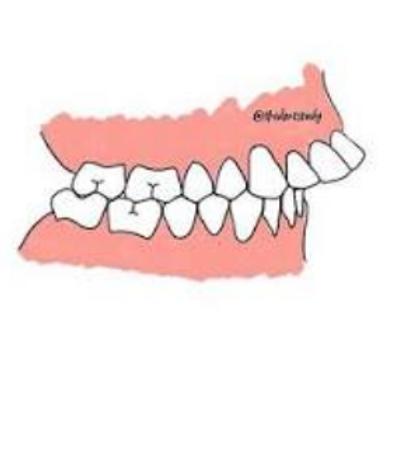
Parents understandably think of orthodontics as straightening teeth. But sometimes the problem I am looking at isn't really a tooth problem. It's a jaw problem. The upper jaw may be too narrow. The lower jaw may be developing too far ahead of the upper jaw, creating an underbite. In other children, there may be a significant discrepancy in the opposite direction. Sometimes the jaws don't fit together properly from side to side, creating a skeletal crossbite.
This is where the difference between orthodontic and orthopedic correction becomes important. Orthodontic treatment moves teeth. Orthopedic treatment takes advantage of a child's growth to influence the developing jaws and their relationship to one another.
Once someone is an adult, I can still move their teeth very effectively. What I can't do is go back and change the way their jaws grew as a child. In severe skeletal problems, that difference can become significant. Sometimes an adult can be treated orthodontically by moving the teeth to compensate for the underlying jaw relationship. In more severe cases, fully correcting the skeletal problem may require jaw surgery.
A growing child gives me another possibility: improve the developing jaw relationship while it is still developing. The American Association of Orthodontists explains that certain orthodontic problems can benefit from treatment while a child's jaws and face are still growing. I don't have complete control over a child's growth, of course. But when growth is part of the problem, it can sometimes become part of the solution.
The Problems Where Timing Matters
A significant underbite is a good example. An underbite may develop because the lower jaw is growing too far forward, because the upper jaw isn't developing sufficiently forward, or because of a combination of the two. If I see that pattern in a young child, I may be able to use orthopedic treatment to encourage a more favorable relationship between the jaws while the child is growing.
That doesn't guarantee that every severe underbite treated early will avoid surgery later. Genetics and future growth still matter. But early treatment may reduce the severity of the problem and give us options we may not have once growth is complete.
A significantly narrow upper jaw is another problem where I pay close attention to timing. The upper jaw should be wide enough to fit properly around the lower jaw. When it isn't, the child may develop a crossbite. There may also be inadequate room for the permanent teeth that still need to erupt.
In a younger child, an expander can widen the developing upper jaw itself. The AAO describes palatal expansion as a treatment used for problems including skeletal crossbites and inadequate space. That distinction matters to me. I am not simply trying to make crooked teeth fit into a wider arch. I am correcting a skeletal width problem while the jaws, bite and face are still developing.
The upper jaw is also part of the anatomy surrounding the nasal airway. Expansion can increase dimensions in that area, which is one reason I pay particular attention when a child with a narrow upper jaw also has chronic mouth breathing, snoring or difficulty breathing comfortably through the nose. Breathing problems are complex, and orthodontic expansion isn't a stand-alone treatment for an airway disorder. When appropriate, I may also recommend that a child be evaluated by a pediatrician or an ear, nose and throat specialist.
The important point is that I am looking at the entire developing child—not just whether the front teeth are straight.
Crowding is a little different. Parents sometimes see crooked front teeth in a seven- or eight-year-old and understandably assume we need to straighten them. Often, we don't. Children can have surprisingly crowded-looking teeth and still have plenty of time to wait for comprehensive orthodontic treatment.
What concerns me more is severe crowding that begins interfering with the eruption of permanent teeth. Permanent teeth are developing inside the bone long before they appear in the mouth. They need somewhere to go. When there isn't enough room, a permanent tooth may become blocked out of the arch, remain impacted in the bone, or travel into an unfavorable position. In some circumstances, an erupting tooth can even affect the root of a neighboring tooth.
So early treatment for crowding isn't always about making an eight-year-old's smile straighter. Sometimes it is about creating room for teeth that aren't even in the mouth yet.
I find that distinction useful when explaining early treatment to parents. I'm thinking several years ahead. If I can create a healthier path for those permanent teeth while they are developing and erupting, I may be able to prevent a much more complicated problem later.
What Changes If We Wait?
Parents will sometimes ask me, “Can't we just fix this later?” And often the answer is yes. But there is another question that matters just as much: Can I get the same result later? Those aren't always the same thing.
If a child has ordinary dental crowding, waiting may make very little difference. If a child has a significant skeletal growth problem, waiting may mean losing the ability to make an orthopedic correction. I may then have to approach the problem by moving the teeth instead.
Depending on the problem and its severity, that can change the choices available to us later. Sometimes it means accepting a different skeletal relationship. Sometimes it can affect whether extractions become part of the treatment discussion. With the most severe jaw discrepancies, surgery may eventually become an option.
This is why I don't think of early treatment as simply starting braces sooner. It isn't. It is using a period of a child's development to accomplish something that may become harder—or fundamentally different—after that period has passed.
Another misconception is that if a child has early treatment, they shouldn't need orthodontics again. That's not necessarily the goal.
If I treat an eight-year-old with a narrow upper jaw, for example, my primary objective may be to correct the width of the jaw and the crossbite. I don't need every permanent tooth perfectly aligned at eight. Those teeth aren't even all there yet.
The child can then continue growing, the remaining permanent teeth can erupt, and we can decide later whether comprehensive orthodontic treatment is needed to align the permanent teeth and refine the final bite. I think of the early phase as addressing the problem that has a time limit.
Sometimes my goal is simply to take a child with a very difficult developing problem and bring them back toward the range of the more routine orthodontic problems I treat every day. That's a successful early treatment.
And sometimes the greatest benefit isn't particularly dramatic when you look at the child's smile immediately afterward. It's the difficult problem we don't have to solve five years later.
Earlier Isn't Better. Better Timing Is Better.
I think this distinction gets lost sometimes when people talk about early orthodontics. I don't believe children should be treated early simply because we can treat them early. If I can wait and get the same result later, I wait.
Early treatment should earn its place in a child's treatment plan. There should be something I believe I can accomplish because the child is growing that I won't be able to accomplish as well—or sometimes at all—if we wait.
That may be correcting a skeletal crossbite, improving a severe jaw-growth pattern, widening a significantly narrow upper jaw, or creating room so permanent teeth have an opportunity to erupt properly. For another child who looks fairly crowded at eight, the best treatment may be no treatment at all for several more years.
The skill isn't simply knowing how to treat these problems. It is knowing which problems to treat, and when.
After more than 30 years of treating children, teenagers and adults, I have had the opportunity to see the same kinds of orthodontic problems at very different stages of development. That has made me appreciate both sides of timing. I've seen how much can sometimes be accomplished when growth is available. I've also seen patients later in life when that particular opportunity has passed.
There are many times when waiting is exactly the right decision. But when growth can be part of the solution, waiting isn't always neutral. Sometimes there really is a window—and the best result depends on recognizing it while it's still open.
If you are concerned about your child's underbite, overbite, crossbite, crowding, jaw development, or the way their permanent teeth are coming in, I would be happy to take a look. At Suzanne M. Dennis, DDS – Orthodontist, our initial orthodontic consultations are complimentary. I have been practicing orthodontics in Charlottesville for more than 30 years, treating children, teenagers and adults through every stage of orthodontic development.
My goal isn't to find a reason to start treatment early. It's to determine whether there is something we can accomplish because your child is growing that could give them a better result later. If there is, I'll explain what I'm seeing, why I think timing matters, and what early treatment could accomplish. And if waiting will give us the same result, I'll tell you that too.