Sometimes you inherit Grandpa Joe's teeth and Aunt Ginny's mouth.
It sounds funny, but it is actually a pretty good way to explain why some people develop severe crowding.
Teeth and jaws don't always come as a perfectly matched genetic set. A person may inherit relatively large teeth from one side of the family and a relatively small dental arch from another. When that happens, there simply may not be enough room for all of the teeth to fit comfortably in a healthy position.
That is one of the situations where the question of extracting permanent teeth can come up.
Whenever possible, I prefer to keep healthy permanent teeth. But orthodontic treatment is not simply about finding a way to squeeze every tooth into the mouth. The goal is to position the teeth where they can function well, look natural, and remain well supported by the bone and gums.
Sometimes keeping every tooth helps us accomplish that.
Sometimes it doesn't.
When there isn't enough room, we have several ways of trying to create it. Depending on the patient, we may be able to use growth, expansion, tooth movement, limited reshaping between teeth, or other orthodontic techniques.
But there are biological limits.
I can almost always make the teeth fit somewhere. That doesn't necessarily mean putting them there is a good idea.
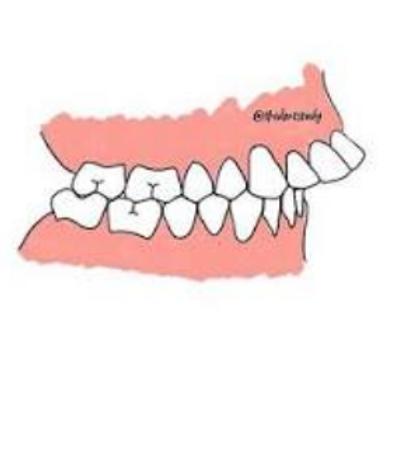
If there is considerably more tooth structure than the dental arch can comfortably accommodate, trying to keep every tooth may require pushing the teeth farther toward the outside of their supporting bone. The front teeth can become excessively flared, the lips may become more prominent or difficult to close comfortably, and the teeth may end up with less ideal bone and gum support.
Teeth don't simply sit in the mouth. They are held in place by bone and periodontal tissues, and where we position them matters.
When teeth are moved too far outside their ideal bony support, the risk of problems such as gingival recession and reduced bone support can increase.
So keeping every tooth only makes sense if we can put those teeth somewhere healthy.
Your Face Matters Just as Much as Your Teeth
This is also why I would never make an extraction decision simply by measuring crowding.
I look at the entire patient.
Can the lips close naturally without strain?
Are the teeth already very prominent?
Does the facial profile look balanced?
Where are the front teeth positioned relative to the jaws and lips?
How much bone is available to support the movement we are considering?
And what is the patient's face likely to look like when treatment is finished?
These questions matter because orthodontic treatment can affect facial profile.
If someone begins with a balanced facial profile and enough room for the teeth, removing teeth and retracting the front teeth unnecessarily can flatten the lips and facial profile. In that situation, extraction treatment would not be desirable.
Now consider someone with significant crowding and excessive dental protrusion. Their lips may already be pushed forward by the amount and position of the teeth underneath them, and they may have difficulty comfortably closing their lips.
For that patient, carefully planned extractions may create the space necessary to position the remaining teeth more appropriately. Rather than compromising the facial profile, treatment may actually improve facial balance and lip closure.
This is why two people who appear to have similar crooked teeth may receive very different treatment recommendations.
The starting point matters.
How Extractions Relate to Airway Space
Airway concerns have become an important part of the conversation around orthodontic treatment, and they are something worth considering carefully.
One concern patients sometimes hear is that removing premolars may require the front teeth to be moved backward, which could reduce space within the mouth and potentially affect the position of the tongue or the airway.
It is an understandable concern, but the relationship between orthodontic tooth movement and airway size is more complex than that. The effect depends on the patient's anatomy, the amount of crowding, the position of the teeth before treatment, and how the remaining teeth are ultimately positioned.
Recent systematic reviews comparing orthodontic patients treated with and without premolar extractions have found little to no average difference in airway volume or minimum airway dimensions between the two groups.
That doesn't mean the airway should be ignored.
It means that the diagnosis matters.
If teeth are removed from someone who doesn't need the additional space and the front teeth are then retracted unnecessarily, that could produce undesirable changes in the lips and facial profile, and airway considerations may also become relevant.
But that is very different from a severely crowded patient whose teeth simply cannot be positioned appropriately within the available dental arch.
In those patients, appropriately planned extractions do not automatically result in a loss of airway space.
The important question isn't simply whether teeth are removed. It is why the space is needed and how that space will be used.
Sometimes Keeping Every Tooth Isn't the Most Conservative Choice
This may seem counterintuitive.
If there isn't enough room for all of the teeth, but we insist that every tooth remain, something else has to change.
The dental arches may need to be expanded farther. The front teeth may need to be moved forward. The incisors can become excessively flared. The lips and facial profile may become too full, and some teeth may end up positioned close to or beyond the limits of their supporting bone.
Over time, inadequate bone support around a tooth can contribute to periodontal problems such as gum recession.
That isn't necessarily a better outcome simply because no teeth were removed.
For certain patients, creating space through extraction allows the remaining teeth to be positioned more securely within the supporting bone, allows the jaws and teeth to fit together better, and can create a more balanced facial result.
For those patients, refusing to consider extraction can actually do them a disservice.
Crowding Isn't the Only Reason We Might Consider an Extraction
I am particularly cautious about recommending removal of healthy permanent teeth in adults and generally prefer to avoid it unless there is a compelling reason. Severe crowding and excessive protrusion are among the most common reasons I might consider removing permanent teeth, but they aren't the only ones.
Occasionally, a patient already has a permanent tooth that is significantly damaged or has a poor long-term prognosis. In those situations, the orthodontic treatment plan can sometimes make the most of the options available.
For example, an adult may have a compromised lower incisor that would otherwise require extensive dental work. If the facial profile, bite, and amount of crowding make it appropriate, that tooth can sometimes be removed and the space closed orthodontically.
This may allow the patient to avoid investing in extensive treatment on a tooth with a questionable long-term prognosis, eliminate the need for a future implant in that space, and still finish with an attractive, functional smile.
It is not better than starting with a healthy tooth. It is simply an example of how orthodontic treatment can sometimes help us make the best of a less-than-ideal situation.
The Goal Is the Right Amount of Space
I don't begin treatment wanting to extract teeth.
I also don't believe the goal should be keeping every permanent tooth regardless of where those teeth ultimately have to be positioned.
The goal is to determine where the teeth should ideally sit for that patient's face, jaws, bite, supporting bone, and long-term dental health—and then determine the best way to get them there.
Most of the time, I would rather preserve a healthy permanent tooth.
But there are situations in which removing teeth creates the space necessary for a healthier bite, better periodontal support, comfortable lip closure, and a more balanced facial profile.
There are also situations where removing teeth would be completely unnecessary and could negatively affect the result.
Both are possible.
That's why an extraction decision should never be based on a blanket rule. It should come from a careful diagnosis of the individual patient.
If you are in Charlottesville and have been told that you or your child may need teeth removed as part of orthodontic treatment, we would be happy to help you understand why an extraction has—or has not—been recommended. A good orthodontic consultation should leave you understanding not only what is being proposed, but why it makes sense for your particular face, bite, and long-term dental health.