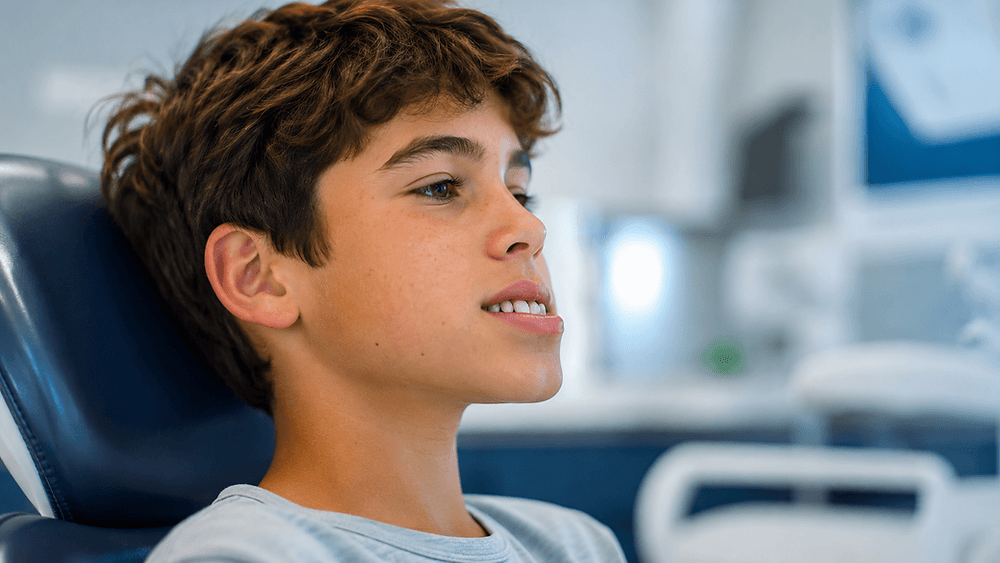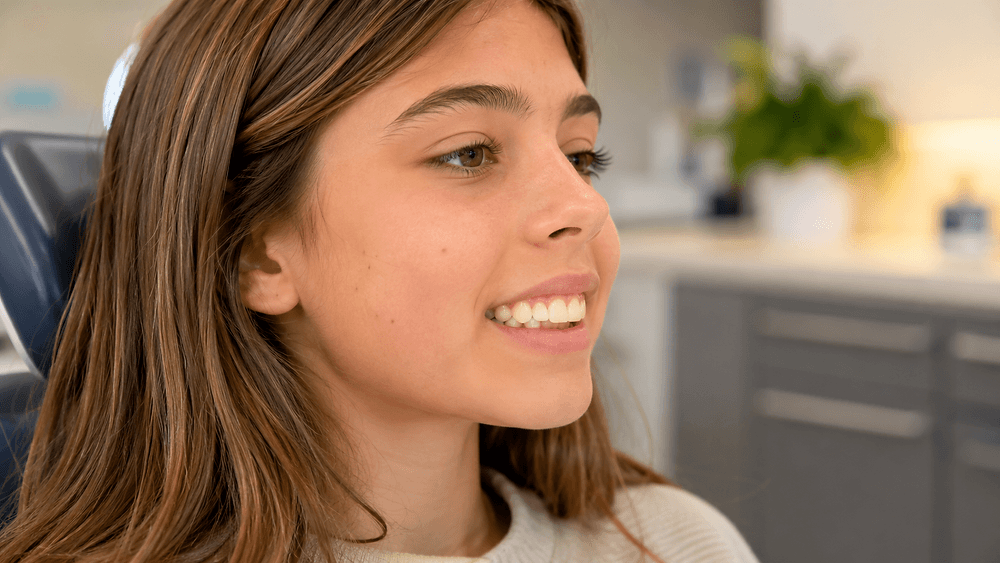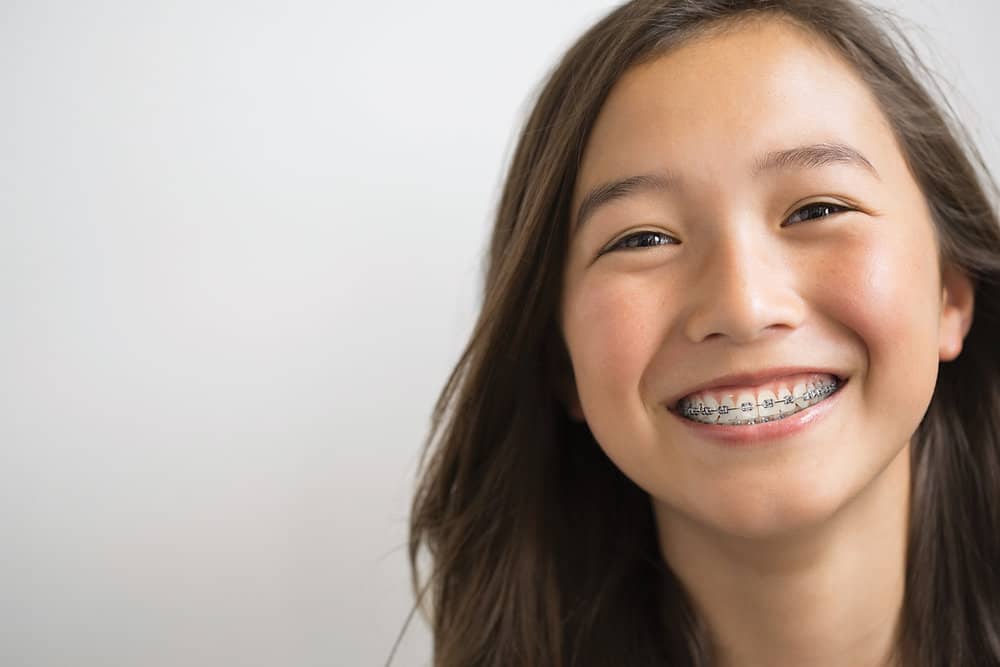
Clear aligners are manufactured by a company. Orthodontic treatment is designed, supervised, and adjusted by a doctor.*
The word orthodontist is not simply another way to describe someone who offers braces or clear aligners. It is a specialty credential. Every orthodontist first completes dental school and becomes a dentist. The doctor must then be accepted into and complete an additional two- to three-year full-time accredited residency devoted to moving teeth, correcting bites, and understanding the development and relationship of the teeth, jaws, and face.
That distinction can be easy to overlook because clear aligners are now available in many different settings. From a patient’s perspective, the products may appear similar: a digital scan, a computer animation, and a sequence of nearly invisible trays. What is harder to see is the depth of orthodontic education and clinical experience behind the treatment plan.
Providers who offer aligners can have very different backgrounds. Their preparation may include product-specific instruction, continuing education, years of clinical experience, or formal specialty training—and those are not interchangeable. An orthodontist’s education follows a standardized specialty path, and an orthodontic practice is devoted every day to tooth movement, bite correction, and the problems that can arise along the way.
For patients, this is less about comparing professional titles than understanding what lies behind a recommendation. Who diagnosed the bite? Who designed and approved the tooth movements? How much experience does that person have when a tooth does not follow the plan? Can the practice offer another approach if aligners are not the best tool?
Dr. Suzanne Dennis offers reassuring answers to those questions. She completed the formal specialty pathway in orthodontics, has practiced in Charlottesville since 1998, and has used aligners since Invisalign was introduced. Her perspective combines advanced training in tooth movement and bite correction with decades spent watching clear-aligner technology become far more capable. Better plastic and more impressive software have expanded what she can do; they have not replaced diagnosis, biomechanics, monitoring, or judgment.
The short answer, if you are comparing providers
- Every orthodontist is first a dentist. After dental school, an orthodontist completes an additional two- to three-year full-time residency focused on moving teeth, correcting bites, and understanding the growth and relationship of the teeth, jaws, and face.
- Not every aligner provider has the same orthodontic background. Product instruction, continuing education, clinical experience, and formal specialty training are different things. Patients should feel comfortable asking about all four.
- An orthodontic practice is focused on more than supplying trays. Dr. Dennis’s daily work centers on tooth movement, bite correction, growth, monitoring, finishing, and choosing the right appliance for each patient.
- Clear aligners are not self-directing. Software helps create a proposed treatment setup, but the doctor must establish the goals, evaluate the roots and supporting tissues, revise the setup, choose the mechanics, monitor progress, and respond when teeth do not move as predicted.
- Straight front teeth are only one part of the result. The bite, root positions, gum and bone support, facial balance, function, stability, and the patient’s goals all matter.
- The more complicated—or uncertain—the situation, the more useful a specialist’s perspective becomes. This is especially true for growing children, significant bite problems, difficult tooth movements, missing or damaged teeth, previous orthodontic treatment, gum or bone concerns, and cases involving several dental specialists.
- You do not have to decide whether your case is “complex.” That is one purpose of an evaluation.
If you came for the quick answer, you have it: the brand of aligner is not that important, but the person diagnosing, planning, and supervising the treatment matters more. You can request a complimentary evaluation with Dr. Dennis without committing to aligners—or to treatment at all.
If you want to understand what an orthodontist actually adds behind the scenes, keep reading.
The aligner is visible. Most of the treatment is not.
When patients picture orthodontics, they naturally picture the appliance. Braces are brackets and wires. Aligner treatment is a series of clear trays.
Orthodontists see the appliance differently. It is a delivery system for a carefully designed force. The same aligner can be a very good tool, a poor tool, or the wrong tool depending on what the doctor is asking it to do.
Consider a crowded lower front tooth. Making the crown appear straight may be easy to show in a simulation. But where will the necessary space come from? Should the arch become wider? Can a small amount of enamel safely be reshaped between selected teeth? Should neighboring teeth move first? Is the tooth being tipped, or is its root being brought into a better position as well? What happens to the way the upper and lower teeth meet when the crowding is relieved?
Those questions do not appear on the outside of the tray. Yet they determine whether the treatment is simply cosmetic alignment or comprehensive orthodontic care.
A helpful distinction: The aligner is the manufactured product. The diagnosis, treatment goals, force system, monitoring, course corrections, and final bite are the professional service.
What does specialty training add?
An orthodontic residency is years of full-time specialty education combining advanced coursework with supervised clinical treatment. The focus is orthodontics and dentofacial orthopedics: how teeth move through bone, how force systems affect individual teeth and entire bites, how the jaws and face grow, and how to diagnose, plan, treat, and retain results across a wide range of patients and problems.
Product instruction can teach a clinician how to submit a scan and operate a manufacturer’s software. Continuing-education programs can add valuable knowledge and may go considerably deeper. But the phrase aligner provider does not, by itself, tell a patient how much orthodontic education the treating clinician has completed, how many different problems they routinely manage, or what alternatives they can provide if the original plan needs to change.
The title orthodontist supplies one important part of that answer: the doctor completed the accredited full-time specialty education required for orthodontics. Dr. Dennis adds decades of clinical experience to that foundation. In her practice, tooth movement and bite correction are not occasional services; they are the central work being diagnosed, planned, adjusted, and finished every day.
As in other areas of health care, specialty training becomes especially reassuring when a problem is more complicated than it first appears—or when the patient simply wants the perspective of someone who concentrates on that work.
Your dentist and orthodontist should be partners
Choosing an orthodontist does not mean choosing against your dentist. In good care, the relationship is collaborative.
Your dentist and hygienist remain essential before, during, and after orthodontic treatment. Healthy teeth and gums are the foundation for safe movement. They provide routine examinations and cleanings, watch for decay and gum disease, and complete restorative care when needed. If Dr. Dennis sees a concern that should be addressed before or during treatment, she coordinates with the patient’s dentist or the appropriate dental specialist.
Dr. Dennis brings the orthodontic part of the picture: how to position the teeth, correct the bite, manage growth, select the appliance, supervise movement, and retain the result. For complex cases, that team may also include a periodontist, oral surgeon, prosthodontist, endodontist, pediatric dentist, or the patient’s physician.
No one professional needs to pretend to be everyone. The patient benefits when each person contributes the expertise for which they are best prepared.
Why clear aligners make expertise easy to underestimate
Braces look mechanical. Patients can see the brackets, the archwire, and the elastics, so it is intuitive that an orthodontist is actively directing forces.
Clear aligners hide much of that engineering inside smooth plastic and software. A digital scan is taken, a colorful animation appears, and a box of trays arrives. The process can feel automated.
But a computer-generated setup is not a diagnosis and its final frame is not a biological promise. A surface scan shows the visible crowns and gums beautifully; it does not, by itself, show the complete position of the roots or the boundaries of the supporting bone. X-rays, photographs, the clinical examination, dental health, jaw relationships, remaining growth, facial proportions, and patient goals all change how the digital plan should be interpreted.
With modern Invisalign planning, for example, software can generate an initial setup using the doctor’s prescription and saved clinical preferences. The doctor can then modify tooth positions, arch form, spacing, enamel reduction, attachments, and other parts of the plan before approval. Other aligner systems have their own planning platforms and workflows.
This technology is valuable because it gives the doctor more control. Its usefulness still depends on the clinical judgment of the person deciding what the plan should be.
For a deeper look at how digital setups are created, modified, and divided into a series of aligners, read Dr. Dennis and the Evolution of Invisalign: Experience Matters.
Straight teeth and a finished bite are not always the same thing
The front six teeth dominate photographs, mirrors, and treatment simulations. They naturally receive most of a patient’s attention. Dr. Dennis looks there, too—but she does not stop there.
She also evaluates:
- whether the upper and lower teeth meet evenly;
- whether the front teeth have a healthy amount of overlap;
- whether the roots are being positioned appropriately within their support;
- whether the arch form and tooth inclinations make sense for that patient;
- whether teeth have enough room to move without creating a different problem;
- whether the jaw slides or shifts when the patient bites;
- whether tooth wear, missing teeth, restorations, or gum health change the plan;
- whether the proposed finish complements the smile and face; and
- whether the result has a reasonable plan for long-term stability.
A patient can be pleased with straighter front teeth while still having spaces between back teeth that should touch, a bite that feels uncomfortable, or a movement that did not finish as intended. Conversely, a tiny cosmetic irregularity may be less important than preserving a healthy bite and sound tooth position.
This is not an argument against esthetics. A confident smile is a meaningful goal. It is an argument for treating esthetics and function as partners rather than competitors.
What Dr. Dennis sees when she reviews an aligner plan
Years of specialty training provide the foundation. Decades of treating patients turn that knowledge into pattern recognition.
When Dr. Dennis reviews a digital setup, she can often identify quickly when something deserves a closer look: a canine being asked to rotate without enough grip, an arch being widened primarily by tipping teeth, a root movement that may need more control, space being closed in the wrong sequence, or a front-tooth correction that could leave the back bite unsettled.
She may respond by changing the staging, adding tooth-colored attachments, planning elastics, creating or preserving space, using a different aligner material, asking for overcorrection, or choosing another appliance. Sometimes the best plan combines methods. Sometimes braces provide more direct control. Sometimes the wisest recommendation is to delay treatment or not treat at all.
That last option matters. A doctor who has several treatment tools does not have to make every patient fit the same product.
At her Charlottesville practice, Dr. Dennis can consider aligners, custom LightForce braces, conventional braces, digital monitoring, or a combined approach. The point is not to use the newest technology in every case. It is to use technology where it improves the patient’s care. For a closer look at one of those alternatives, read LightForce Braces vs. Traditional Braces.
What happens when teeth do not follow the animation?
Teeth are living structures, not pieces sliding across a screen. Even a carefully planned movement may occur more slowly or differently than expected. A tooth can begin to lag while the rest of the aligner still appears to fit. An attachment can loosen. Elastics may need adjustment. A patient may struggle to reach the recommended wear time.
This is where supervision becomes part of treatment rather than an administrative check-in.
Dr. Dennis evaluates whether the aligners are tracking, whether the bite is developing as planned, and whether the gums and supporting tissues remain healthy. If something changes, she decides whether the patient should remain in the current tray longer, return to a previous stage, replace an attachment, alter the mechanics, obtain a new scan, order refinement aligners, or change the treatment approach.
Her practice can also use digital monitoring for selected patients to review aligner fit and progress between office visits. Technology may help identify a change sooner, but Dr. Dennis still interprets the information and decides what to do with it. Learn more in Benefits of Dental Monitoring and Virtual Orthodontic Care.
The obvious point is also the essential one: removable aligners only work while they are being worn. For most patients, that means roughly 20 to 22 hours each day, according to the treating doctor’s instructions. An experienced provider should discuss that honestly. If a patient’s schedule, habits, or preferences make consistent wear unlikely, braces may be the more predictable—and sometimes less stressful—choice.
A case can look simple before it is diagnosed
Patients should not be expected to know whether their case is easy or complex. A small visible irregularity can sit on top of a larger issue, while teeth that look very crowded can sometimes be more straightforward than they appear.
A gap between front teeth, for example, might relate to tooth size, a missing tooth, tooth position, tongue pressure, gum anatomy, or the relationship between the upper and lower arches. Crowding may be isolated to the teeth, or it may be connected to arch width and jaw development. Front teeth that protrude may reflect tooth position, jaw position, or both. Teeth that shifted after earlier orthodontic treatment may require a simple correction—or may be revealing that the bite or retention plan deserves another look. Effective Orthodontic Solutions for Treating Overbites shows how one familiar label can describe several very different problems.
In adults, Dr. Dennis may need to plan around crowns, implants, missing teeth, gum recession, bone support, or future restorative work. In children and teenagers, the eruption of permanent teeth and the direction and timing of growth become part of the decision.
The point is not that every patient has a hidden problem. Most do not. The point is that a careful evaluation determines whether there is one before treatment begins.
When is a specialist’s opinion especially useful?
Anyone considering orthodontic treatment can reasonably consult an orthodontist. A specialist’s perspective becomes particularly valuable when:
- a child is still growing or has not yet lost all the baby teeth;
- the concern involves an overbite, underbite, crossbite, open bite, jaw shift, or facial imbalance;
- teeth are significantly crowded, rotated, impacted, missing, or unusually shaped;
- extractions, jaw surgery, implants, crowns, veneers, or gum treatment may be part of the larger plan;
- there is a history of gum disease, bone loss, root shortening, dental trauma, or other health concerns;
- previous braces or aligners did not produce or maintain the desired result;
- an aligner has stopped fitting or the bite feels worse during treatment;
- the provider is recommending treatment but cannot clearly explain the alternatives; or
- the patient simply wants a specialist’s opinion before making a major decision.
For parents, an orthodontic evaluation is also useful when nothing obvious appears wrong. Dr. Dennis may find that the teeth and jaws are developing normally and no treatment is needed. That reassurance is a successful consultation, not a missed sale. Read When Should My Child First See an Orthodontist? A Parent’s Guide for a fuller explanation.
Questions worth asking any clear-aligner provider
A thoughtful provider should welcome specific questions. Before beginning treatment, ask:
- Who diagnoses my orthodontic problem and reviews the final digital setup?
- Will my evaluation include my bite, roots, bone support, gum health, and facial relationships—not only a surface scan?
- What is the most difficult movement in my plan?
- Will the treatment correct my bite as well as align the visible teeth?
- Why are you recommending this aligner system for me?
- Would braces or a combined approach offer any advantage?
- How will you know whether my teeth are tracking?
- Who reviews remote scans or progress photographs, if those are used?
- What happens if a tooth does not move as planned?
- Are refinement aligners included or likely?
- How will you coordinate with my general dentist or other specialists?
- What is the retention plan after active treatment?
The value is not in hearing that everything will be easy. It is in receiving answers that are specific to your teeth and make sense.
Why Dr. Dennis’s experience matters
Dr. Dennis brings two kinds of perspective to clear-aligner treatment.
The first is formal specialty training in orthodontics and dentofacial orthopedics: the biology and mechanics of moving teeth, correcting bites, and understanding growth.
The second comes from timing. Dr. Dennis began practicing in Charlottesville in 1998 and adopted aligners when Invisalign was introduced. She has treated patients through the technology’s early limitations, its rapid growth, and today’s much broader selection of systems, materials, attachments, software, and monitoring tools.
That experience helps her avoid two easy mistakes. She does not underestimate modern aligners because of what early versions could not do. She also does not overestimate them because a new animation looks flawless.
Most importantly, Dr. Dennis is not limited to aligners. She can recommend them enthusiastically when they fit the case, modify the plan when the default setup falls short, combine them with other tools when useful, or explain why braces may provide better control. Her recommendation begins with the patient, not the package.
A clearer answer before you choose
You do not need to arrive at an orthodontic consultation knowing whether you want Invisalign, Clarity Aligners, another aligner system, or braces. You do not need to know whether your case is simple. You do not even need to be certain that you want treatment.
At a complimentary first visit, Dr. Dennis can listen to what concerns you, examine the smile and bite, and explain whether treatment would help—now, later, or perhaps not at all. If treatment is appropriate, she can show you the reasonable options and the tradeoffs between them.
Request a complimentary evaluation with Dr. Suzanne Dennis or call 434-973-4446.
The purpose of the visit is not to sell you a clear tray. It is to give you a clearer answer.