Most parents think about orthodontics in terms of teeth. They notice crowding, crooked front teeth, gaps, or an overbite, and naturally assume the teeth themselves are the main issue. What often surprises them during an orthodontic evaluation is how much time we spend looking at things other than the teeth. We pay close attention to the shape of the jaws, the width of the dental arches, how the lips rest together, how the child breathes, and even where the tongue sits when the mouth is at rest.
The tongue plays a far bigger role in orthodontics than most people realize. In fact, one of the strongest and most constant forces acting on the teeth throughout life is not braces or chewing, but the tongue itself. The tongue is an incredibly active muscle. It works constantly when we speak, swallow, chew, and breathe. Most people swallow thousands of times every day, and every swallow creates pressure somewhere inside the mouth. Over years of growth and development, those pressures matter.
Ideally, the tongue rests gently against the roof of the mouth when we are not speaking or eating. This natural posture helps support healthy development of the upper jaw from the inside outward. During childhood, when the face and jaws are still growing, the tongue acts almost like an internal support structure helping maintain proper width and shape of the upper arch. When the tongue rests upward against the palate and a child breathes comfortably through the nose, the upper jaw often develops broader and more naturally. This creates better balance between the teeth, jaws, and facial muscles.
When that balance is disrupted, orthodontic problems often begin developing.
One of the most common things we see in children with chronic mouth breathing or airway-related issues is altered tongue posture. Instead of resting upward against the roof of the mouth, the tongue may sit lower in the mouth or farther forward to help maintain airflow. When this happens during active growth years, the upper jaw may gradually develop more narrowly because it is no longer receiving the same natural support from the tongue.
Parents are often surprised when I explain that crowded teeth are not always the primary problem. Frequently the real issue is that the upper jaw did not develop wide enough to comfortably accommodate the teeth and tongue together. The tongue needs room. When the upper arch is narrow, the tongue may posture itself lower or farther forward simply because there is not enough space for it to rest ideally.
As the upper jaw narrows, several orthodontic problems may begin appearing. The permanent teeth may not have enough room to erupt properly, leading to crowding. Crossbites may develop where the upper teeth fit inside the lower teeth instead of outside. The smile itself may appear narrower. Some children develop a longer, more constricted facial appearance over time because the jaws are not developing ideally.
This is one reason orthodontists sometimes recommend palatal expanders during childhood growth years.
Palatal expanders are orthopedic appliances designed to widen the upper jaw while the facial bones are still developing. The timing of this treatment matters tremendously. In many cases, the ideal window for expansion is during the mixed dentition years, often around ages seven, eight, or nine, while the upper jaw remains more responsive to orthopedic guidance. At this age, the upper jaw has not fully matured, which means we can often achieve more true skeletal widening rather than simply tipping teeth outward.
One of the important goals of expansion is creating enough room not only for the erupting permanent teeth, but also for the tongue itself. When the upper jaw is too narrow, the tongue may be forced into a lower or more forward posture. By widening the upper arch appropriately, we can often create a healthier environment for the tongue to rest upward against the palate where it naturally belongs. In some children, this may help reduce the forward tongue pressure that contributes to flaring front teeth or unstable bite relationships later on.
Expansion can also improve crossbites, create room for crowded teeth, and help coordinate the upper and lower arches during important stages of growth. However, one thing I always try to explain to parents is that earlier treatment is not automatically better treatment. Orthodontics is heavily dependent on timing and growth patterns, and every child develops differently.
There has been increasing discussion within orthodontics regarding the importance of proper timing for expansion and growth modification. Some studies have suggested that expansion performed too early in certain patients may contribute to undesirable facial changes. This is one reason careful diagnosis and individualized treatment planning are so important. Orthodontics is not simply about making arches wider. We must evaluate facial proportions, airway considerations, skeletal growth patterns, bite relationships, and long-term stability before deciding when and how treatment should occur.
Good orthodontics is not about treating every child early. It is about understanding growth and recognizing when intervention is beneficial and when observation may be the better choice. Some children clearly benefit from expansion during early growth years. Others are better monitored until the timing is more ideal. Parents sometimes assume orthodontics is mainly focused on straightening visible teeth, but orthodontists spend a great deal of time thinking about facial balance, jaw development, tongue posture, airway function, and long-term stability.
This is one reason early orthodontic evaluations can be so valuable even when treatment is not immediately necessary. An orthodontic evaluation around age seven often allows us to identify developing patterns before they become much more severe later. Sometimes we simply monitor growth. Other times we recognize narrowing arches, crossbites, crowding, or tongue posture issues that may benefit from early intervention.
One of the most fascinating aspects of orthodontics is that the same tongue that helps support healthy jaw development in childhood continues influencing the teeth and bite throughout life. The tongue never stops exerting pressure inside the mouth. The teeth are not fixed permanently in concrete. They exist within living bone that constantly remodels and adapts over time. Tiny forces repeated thousands of times every day can gradually reshape the bite over years and decades.
Sometimes the tongue pushes outward too much. Other times it does not provide enough support at all.
As people age, the tongue and surrounding muscles can weaken just like muscles elsewhere in the body. Most people understand that muscle tone changes with age, but they rarely think about this happening inside the mouth. When tongue posture weakens or changes over time, the support it once provided to the upper jaw and dental arches may diminish.
Gradually, the arches may begin collapsing inward.
This is something many adults notice without understanding why it is happening. Their smile may appear narrower than it did twenty or thirty years earlier. The upper teeth may begin tipping inward. The lower front teeth often become more crowded with age. Patients frequently tell me they look at old photographs and realize their smile used to appear broader and fuller.
People often describe this as their smile looking “older,” even if they cannot identify exactly why.
The reason is that the teeth and arches help support the lips and lower face. When the arches narrow and collapse inward, the lips may lose some of their support and fullness. The smile can appear smaller and less broad. The lower face may begin looking more aged or sunken because the teeth are no longer positioned ideally beneath the soft tissues.
Many people assume facial aging is entirely related to wrinkles or skin changes, but the teeth and jaws play a tremendous role in facial appearance. Teeth act as part of the internal framework supporting the lips and lower face. Changes in the bite and arch form can subtly alter facial proportions over time.
At the same time, some people experience the opposite problem.
Instead of losing tongue support inward, the tongue may begin posturing farther forward. This is especially common in patients with chronic mouth breathing, airway problems, nasal obstruction, or certain sleep-related breathing issues. When breathing becomes more difficult through the nose, the tongue may slide forward to help maintain airflow.
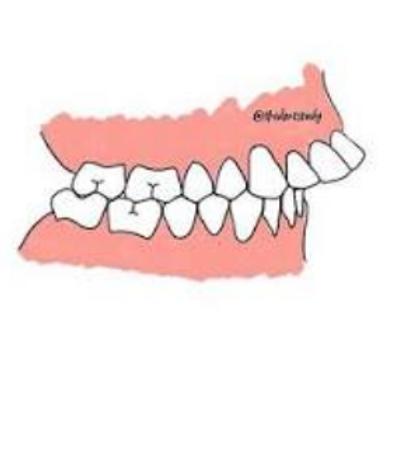
Because the tongue is such a powerful muscle and functions continuously, even relatively light forward pressure repeated thousands of times per day can gradually push the front teeth outward.
Over time, the upper front teeth may begin flaring forward. Spaces may develop between the teeth. The lips may no longer close comfortably at rest without muscle strain. Some patients begin developing a fuller or more protrusive appearance around the mouth because the teeth beneath the lips are positioned farther outward than they once were.
Even subtle changes in front tooth position can dramatically affect facial appearance because the lips are directly supported by the teeth underneath them.
Patients are often surprised when they realize their teeth are influencing how the entire lower face looks. Front teeth that flare outward may make the lips appear more prominent or strained. Inward collapse of the arches may reduce smile width and lip support. These are gradual changes that often occur slowly enough that people do not notice them day to day.
One of the reasons orthodontics becomes more fascinating the longer you practice is that the teeth are not isolated structures. They are part of a constantly adapting system involving muscles, tongue posture, airway function, bone support, facial balance, and long-term aging.
The effects are not limited to appearance either.
As arches narrow or teeth flare outward, functional problems often begin developing. Crowded teeth become more difficult to brush and floss properly. Plaque and bacteria collect more easily in overlapping areas. Gum inflammation may increase. Certain teeth begin carrying excessive bite forces while others lose ideal contact.
Over time, these imbalances can contribute to wear, fractures, gum recession, and even tooth loss.
Patients frequently notice increased chipping or flattening of their teeth as their bite changes with age. When the teeth no longer fit together ideally, certain teeth absorb more pressure during chewing or grinding. This uneven force distribution can accelerate wear patterns dramatically.
Gum recession is another common issue. Teeth that flare outward may move outside their ideal bone support over time, leaving the gums more vulnerable to recession. Crowded teeth are also harder to clean effectively, increasing the risk of periodontal disease and bone loss.
Chewing efficiency can decline as well.
The teeth function best when the upper and lower arches fit together in coordinated balance. As teeth shift, collapse inward, or flare outward, the bite may become less stable and less efficient. Some patients unconsciously begin chewing differently because certain areas of the mouth no longer feel comfortable or functional.
Speech can occasionally be affected too. Because the tongue plays such a central role in speech, changes in tongue posture and tooth position sometimes alter pronunciation of certain sounds.
This is one reason orthodontics today involves much more than simply straightening teeth for cosmetic reasons. Healthy alignment affects brushing, gum health, chewing function, bite stability, facial support, and long-term preservation of the teeth themselves.
As people live longer and keep their natural teeth longer than previous generations, maintaining healthy tooth position becomes increasingly important.
Many adults assume worsening crowding or bite changes are simply unavoidable parts of aging that must be accepted. While some degree of change is natural, orthodontic treatment can often improve both function and appearance significantly, even later in life.
One of the biggest misconceptions people have is thinking braces are only for teenagers.
In reality, orthodontic treatment is often extremely beneficial for adults because the teeth and bite continue changing throughout life. Many adults seek treatment because they notice worsening crowding, shifting front teeth, bite collapse, or increasing wear. Others need orthodontic treatment before restorative work such as crowns, veneers, implants, or bridges.
Orthodontics can help reposition teeth into healthier, more stable alignment where they function better and are easier to maintain long term.
What surprises many adults is how much improving alignment can affect overall facial appearance as well. Teeth that are positioned properly tend to support the lips and smile more naturally. Correcting inward collapse can broaden the smile and restore fullness. Correcting flared front teeth may improve lip posture and facial balance.
Modern orthodontics has also changed dramatically over the years. Many adults still picture bulky braces from decades ago, but today treatment is often far more aesthetic, comfortable, and efficient than people expect. Clear aligners, ceramic braces, digital scanning, and highly customized treatment planning have transformed the orthodontic experience for many patients.
One thing I think adults appreciate as they get older is understanding that orthodontics is not about perfection. The goal is not creating an artificial smile that looks unnatural. The goal is healthy function, stability, facial balance, and preserving the teeth for as long as possible.
The tongue continues influencing the teeth throughout life whether we realize it or not. The relationship between the tongue, airway, muscles, and teeth never truly stops evolving. This is why orthodontics today focuses not only on where the teeth are, but also on why they moved there in the first place.
After many years in orthodontics, one thing becomes very clear: the mouth is constantly adapting throughout life. The teeth, tongue, jaws, muscles, and airway are all connected. Sometimes one of the most powerful forces shaping how we look and function is something people rarely think about at all — the tongue.