When most parents think about enlarged tonsils and adenoids, they usually think about sore throats, strep infections, snoring, or maybe a child who always seems congested. Those are certainly common clues. But in an orthodontic office, enlarged tonsils and adenoids often show up in a much more surprising way.
A child may come in because their teeth are crowded. Or because the front teeth are being pushed forward. Or because there is an open bite, a narrow upper jaw, a gummy smile, or a bite that just does not seem to be developing normally. Parents are often focused on the teeth, because that is what they can see. But as an orthodontist, I am looking at the whole child. I am looking at the way the lips rest, how the tongue sits, whether the child breathes comfortably through the nose, the shape of the palate, the width of the dental arches, the position of the jaws, and the balance of the face.
Sometimes, when I put all those pieces together, the teeth are not really the first problem. They are the clue.
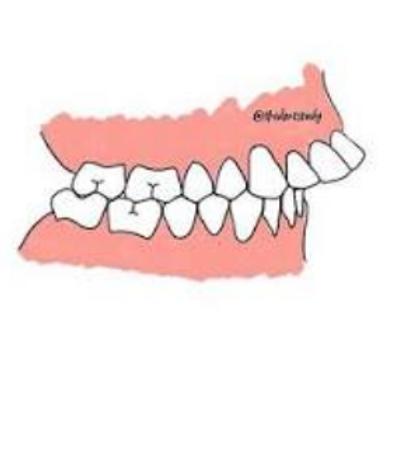
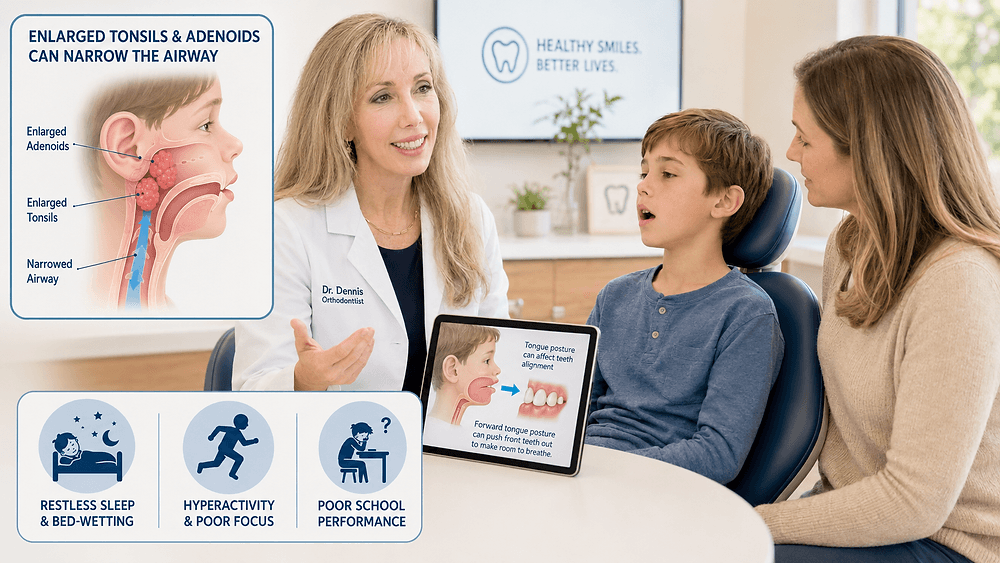
One of the patterns I watch for very carefully is a child who appears to be struggling to breathe well through the nose. When nasal breathing is difficult, children often adapt by breathing through the mouth. Over time, that can change the posture of the lips, cheeks, tongue, and jaws. The tongue may not rest up in the roof of the mouth the way it ideally should. Instead, it may sit low or forward, sometimes pressing against the teeth. In some children, the tongue almost seems to be trying to make room for the airway. That constant pressure can push teeth outward, contribute to spacing or flaring of the front teeth, and affect how the bite develops.
This is one of the reasons an orthodontic concern can lead to a much bigger conversation.
Why Tonsils and Adenoids Matter
The tonsils are the tissue you can usually see in the back of the throat. The adenoids are similar tissue located higher up behind the nose, where you cannot see them just by looking in the mouth. In children, both the tonsils and adenoids can become enlarged. When they take up too much space, they can partially block the airway, especially during sleep.
A child with enlarged tonsils or adenoids may snore, sleep with the mouth open, breathe noisily, toss and turn, sweat during sleep, wake frequently, or seem hard to wake in the morning. Some children have obvious pauses in breathing. Others do not. In fact, many children with airway-related sleep problems do not look sleepy during the day the way adults do. Instead, they may look wired, emotional, distracted, restless, or hyperactive.
That is one of the things that surprises parents the most.
The American Academy of Otolaryngology–Head and Neck Surgery explains that obstructive sleep-disordered breathing in children is often caused by large tonsils and adenoids, and that children may show symptoms such as struggling in school, acting out, bed-wetting, or poor growth. You can read more about their guidance here: AAO-HNS Tonsillectomy in Children Guideline Fact Sheet.
The Orthodontic Clue: Teeth Being Pushed Out
One of the most important airway clues I see in the orthodontic office is a tongue that is not resting where it should.
Ideally, the tongue should rest gently against the palate, or roof of the mouth. That position helps support normal upper jaw development. When a child cannot breathe well through the nose, the mouth may stay open and the tongue often drops down or comes forward. That change in posture may seem small, but it can matter a great deal during growth.
The tongue is a powerful muscle. If it rests low, forward, or between the teeth for hours every day and night, it can influence the position of the teeth and the shape of the arches. Parents may notice that the front teeth are being pushed forward, that the bite is opening, or that spaces are developing. Sometimes they describe the teeth as “sticking out,” even though the real issue may be the tongue posture and the airway behind it.
This does not mean every child with flared teeth has enlarged tonsils or adenoids. Many orthodontic problems have more than one cause. Genetics, habits, thumb sucking, pacifier use, allergies, jaw growth patterns, and normal dental development can all play a role. But when I see flared teeth along with mouth breathing, lip incompetence, a narrow upper jaw, restless sleep, or a history of snoring, I start asking more questions.
That is when the orthodontic exam becomes more than just an exam of the teeth.
The Bed-Wetting Connection
Bed-wetting is one of the symptoms that parents least expect me to ask about.
Understandably, many parents think of bed-wetting as a bladder issue, a deep-sleep issue, a developmental issue, or sometimes a stress-related issue. Those can all be true. But in some children, bed-wetting can also be connected to sleep-disordered breathing.
When a child is not breathing well during sleep, the body may experience repeated disruptions. Sleep becomes fragmented, oxygen levels can fluctuate, and the normal signals between the brain, hormones, and bladder may be affected. The result can be nighttime wetting in a child who otherwise seems old enough to stay dry.
The American Academy of Pediatrics’ parent resource, HealthyChildren.org, notes that in some cases bed-wetting can occur because a child has obstructive sleep apnea and snores. Their article on bed-wetting is available here: Bedwetting in Children & Teens: Nocturnal Enuresis.
This is not something I diagnose as an orthodontist. But if a parent tells me their child snores, mouth breathes, has large tonsils, and still wets the bed at night, I pay attention. That combination deserves a closer look by the appropriate medical provider.
One of the most rewarding things I hear from parents after an ENT evaluation and treatment is, “We had no idea this was connected.” Some parents come back after their child has had tonsils and adenoids removed and tell me the bed-wetting stopped. Not every child has that result, of course, and not every case of bed-wetting is airway-related. But when it does happen, it can be life-changing for the child and the family.
Hyperactivity Instead of Sleepiness
Adults with poor sleep often feel exhausted. Children can be different.
A child who is not sleeping well may not walk around saying, “I’m tired.” Instead, they may become hyperactive, impulsive, emotional, or unable to sit still. They may have trouble focusing. They may seem defiant or easily frustrated. They may be labeled as having behavior problems when, in reality, their body is fighting through poor-quality sleep night after night.
This is why I ask parents about daytime behavior when I suspect an airway issue. I want to know if the child is hard to wake in the morning, if they fall asleep in the car, if they seem restless at school, or if teachers have raised concerns about attention.
Again, this does not mean every hyperactive child has enlarged tonsils or adenoids. It also does not mean an orthodontic visit replaces a pediatrician, sleep physician, or ENT evaluation. But sleep matters. Breathing matters. And if the airway is affecting the child’s ability to sleep, that can show up during the day in ways that do not look like sleepiness at all.
Mayo Clinic also lists enlarged tonsils and adenoids as a main risk factor for pediatric obstructive sleep apnea, especially in younger children. Their overview is here: Pediatric Obstructive Sleep Apnea.
Poor School Performance
Another surprising symptom is a drop in school performance.
Parents may bring a child to the orthodontist because the teeth are crowded, but during the visit they mention that the child is struggling in school, having trouble concentrating, or falling behind. Sometimes this has been going on for years. Sometimes the child is very bright but cannot seem to focus or stay organized. Sometimes the teacher says the child is restless, inattentive, or not reaching their potential.
When I hear that in combination with mouth breathing, snoring, open-mouth posture, enlarged tonsils, or a narrow palate, I begin to wonder about sleep quality.
Children need deep, restful sleep for learning, memory, mood regulation, and growth. If a child is waking repeatedly throughout the night because the airway is partially blocked, the child may not be getting the sleep their brain needs. Even if they are technically “asleep” for enough hours, the quality of that sleep may be poor.
This is one of the reasons I believe orthodontists have an important role in screening. We are not treating the tonsils or adenoids. We are not diagnosing sleep apnea. But we often see children at an age when growth patterns, dental development, and breathing patterns are all connected. We may be the first provider to notice that the orthodontic problem is part of a larger pattern.
What I Look For During an Orthodontic Exam
When I examine a child, I am paying attention to much more than whether the teeth are straight. I am looking at whether the lips close comfortably at rest or whether the mouth hangs open. I am looking at the width of the upper jaw, the shape of the palate, the amount of crowding, the position of the front teeth, and whether the bite suggests a tongue-thrust pattern.
I also listen to the parent. Does the child snore? Is sleep restless? Does the child grind their teeth? Do they wake up tired? Do they breathe through the mouth during the day? Are allergies a constant issue? Has anyone noticed pauses in breathing? Is there bed-wetting beyond the age when the family expected it to stop? Are there concerns with attention, hyperactivity, or school performance?
Sometimes the answer to one question is not very concerning. But when several answers point in the same direction, I may recommend an evaluation by an ear, nose, and throat specialist.
An ENT can evaluate the tonsils and adenoids directly and determine whether they are contributing to airway obstruction. Depending on the child, that evaluation may include a physical exam, a look at the nasal airway, imaging, or sometimes a sleep study. The ENT is the one who determines whether treatment is needed and what treatment is appropriate.
Why Parents Are Often Amazed After Treatment
When a child truly has enlarged tonsils and adenoids that are interfering with breathing and sleep, treatment can sometimes change much more than snoring.
Parents may notice that their child sleeps more quietly. The mouth may close more comfortably. The child may wake more rested. Bed-wetting may improve. Teachers may report better focus. A child who seemed hyperactive or emotionally fragile may become calmer. School performance may improve because the child is finally getting better sleep.
These improvements can feel almost unbelievable to parents, especially when they originally came to the orthodontist because of crooked teeth.
I have had many conversations with parents who say, “I wish we had known sooner.” That is why I think it is so important to talk about these symptoms. Bed-wetting, hyperactivity, and school struggles can feel like separate problems. But sometimes they are connected by one underlying issue: a child who is not breathing well during sleep.
Orthodontics Still Matters
Even when tonsils and adenoids are treated, orthodontic care may still be needed. If the upper jaw is narrow, if the bite has developed improperly, or if the teeth have been pushed out of position, orthodontic treatment can help guide the teeth and jaws into a healthier relationship.
The timing matters. The American Association of Orthodontists recommends that children have their first orthodontic check-up by age seven. That does not mean every seven-year-old needs braces. It means we can evaluate growth, tooth eruption, bite development, and possible airway-related patterns early enough to decide whether treatment, monitoring, or referral is appropriate. You can learn more from the American Association of Orthodontists here: Child Orthodontics.
In some children, early orthodontic treatment may help create more space for the teeth, improve the bite, or support better jaw development. But if the child cannot breathe well through the nose, orthodontics alone may not address the real cause of the pattern. That is why collaboration matters. Orthodontists, pediatricians, ENTs, allergists, and sometimes sleep specialists may all have a role.
When to Ask More Questions
If your child has orthodontic concerns along with snoring, chronic mouth breathing, restless sleep, bed-wetting, hyperactivity, or poor school performance, it is worth asking whether the airway could be part of the picture.
You do not need to panic, and you do not need to assume your child needs surgery. Many children snore temporarily during a cold or allergy flare. Many children wet the bed for reasons that have nothing to do with tonsils or adenoids. Many orthodontic problems are not airway-related.
But patterns matter.
If a child’s teeth are being pushed forward by a low or forward tongue posture, if the mouth is open most of the time, if sleep is noisy or restless, and if there are daytime symptoms like hyperactivity or school struggles, I want that child evaluated more fully. My role is to recognize the signs, explain what I am seeing, and refer to the right provider when needed.
As an orthodontist, I love creating beautiful smiles. But a healthy smile is part of a healthy child. Sometimes the most important thing we can do during an orthodontic exam is notice that the teeth are telling us something about breathing, sleep, and growth.
And sometimes, once the airway is addressed, families are amazed by how many other things begin to improve.