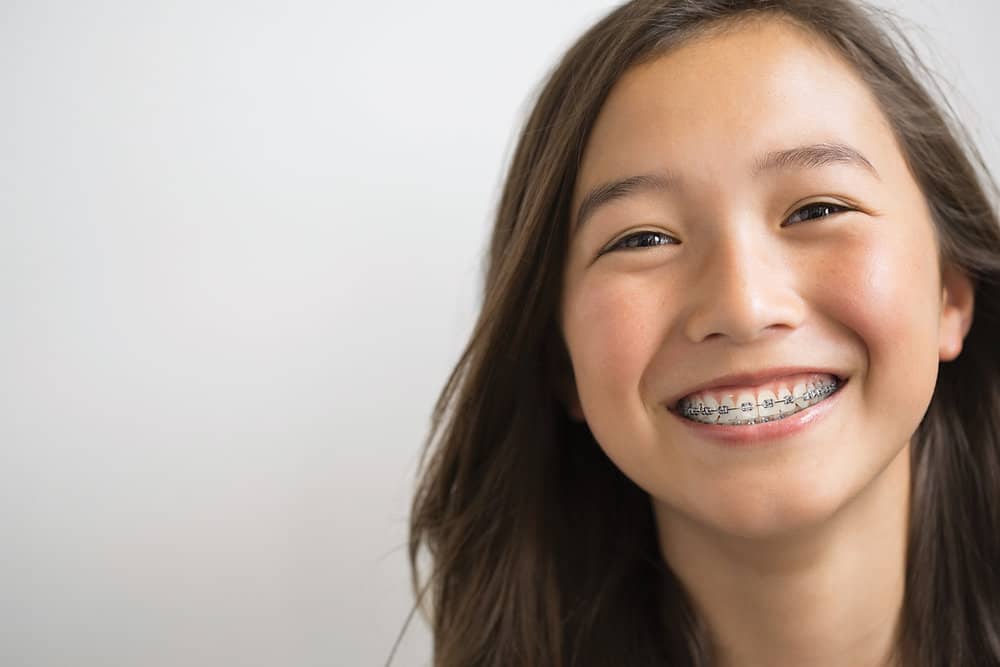
When parents come to see me about an overbite, they usually think they are asking a fairly simple question. They may say, “Her top teeth cover too much of the bottom teeth,” or “His front teeth stick out,” or “We were told he has a deep bite.” Sometimes an adult says, “I had braces years ago, but my bite still never felt quite right,” or “My dentist says I am wearing down my front teeth.”
What many people do not realize is that an overbite is one of the most interesting problems in orthodontics, because the word itself can describe several very different situations.
Sometimes the problem is mainly in the teeth. Sometimes it is in the jaws. Sometimes it is a growth pattern issue. Sometimes it is a wear issue that develops slowly over time. Sometimes it is obvious to a parent the moment a child smiles. Other times it is subtle, and the real clues are chipped teeth, gum irritation, jaw strain, or a smile that looks closed or heavy even though the teeth do not look terribly crooked.
That is why overbites deserve a careful diagnosis and not just a quick label.
In my practice, I do not look at an overbite as simply top teeth too far over the bottom teeth. I look at why it happened, what structures are involved, whether it is getting worse, whether it is damaging the teeth or supporting tissues, and what kind of correction will be healthiest and most stable long term. That is where orthodontics becomes much more than cosmetic tooth straightening. It becomes a study of function, growth, facial balance, and long-term dental health.
What Is an Overbite?
An overbite refers to the vertical overlap of the upper front teeth over the lower front teeth.
A small amount of overlap is normal and healthy. In fact, the upper front teeth are supposed to overlap the lowers somewhat. The problem is when that overlap becomes excessive. When the upper teeth cover too much of the lower teeth, we often call it a deep bite.
People also use the word overbite when they really mean that the upper front teeth stick out too far horizontally. That is a different measurement called overjet. Overjet describes how far forward the upper front teeth are relative to the lowers. A patient can have too much overbite, too much overjet, or both. Those may sound similar to a patient or parent, but from an orthodontic standpoint they are not the same problem, and they are not always treated the same way.
This distinction matters because a patient whose upper teeth are dramatically ahead of the lower teeth may have a very different underlying problem from a patient whose upper teeth simply overlap too deeply. One may be a tooth-position problem. Another may be a jaw-growth problem. Another may be a combination of both.
That is why a good orthodontic exam does much more than say, “Yes, you have an overbite.” It asks a more important question: What kind of overbite is it, and what is causing it?
Why Overbites Happen
Overbites develop for different reasons, and often more than one factor is involved.
Genetics plays a major role. Jaw size, jaw position, facial pattern, and tooth size often run in families. A child whose parents had a deep bite, a strong overjet, or a retrusive lower jaw may very well show some of the same traits.
Growth pattern also matters. Some children have facial growth that tends to rotate the bite deeper as they grow. Others have eruption patterns in which the front teeth come in farther than ideal or the back teeth do not erupt enough to help maintain better vertical balance. In some patients, the lower jaw is positioned back relative to the upper jaw, which makes the bite appear deeper and the upper teeth more prominent.
Habits can contribute as well. Thumb sucking, prolonged pacifier use, tongue habits, and abnormal swallowing patterns can all influence how the front teeth and jaws develop. Even after those habits stop, the effects on the bite can remain.
Crowding is another piece of the puzzle. When teeth do not have enough room, they often erupt in positions that make the bite deeper or less stable. In adults, tooth wear can complicate the picture even further. Over time, a patient may wear down the front or back teeth in a way that changes the bite and exaggerates an already existing deep bite.
So when I look at an overbite, I am not only asking what it looks like today. I am asking how it developed, what structures are driving it, and what it is likely to do in the future if left untreated.
Dental Overbite vs Skeletal Overbite
This is one of the most important distinctions in overbite diagnosis, and it is something most patients have never had explained clearly.
A dental overbite is caused primarily by the position of the teeth. The jaws themselves may be in a fairly reasonable relationship, but the teeth have erupted or tipped into a deeper-than-ideal overlap. In those cases, treatment is often directed at repositioning the teeth and coordinating the bite.
A skeletal overbite involves the relationship of the jaws. The upper jaw may be too far forward, the lower jaw may be positioned too far back, or the patient may have a vertical growth pattern that encourages a deep bite. In these cases, the teeth are often compensating for an underlying skeletal issue rather than causing the problem by themselves.
Why is that important? Because the treatment possibilities are different.
If the problem is primarily dental, braces or aligners may be enough to correct it very nicely. If the problem is skeletal, then age becomes very important. A growing child may still have orthopedic potential, meaning we can sometimes guide growth to improve the jaw relationship. An adult no longer has that same growth opportunity, so the conversation changes. We may still improve the bite significantly with orthodontics, but in some severe skeletal cases, the only way to fully correct the jaw relationship is with orthognathic surgery, which is jaw surgery combined with orthodontic treatment.
This is where patients often say, “Wait, surgery? I thought I just had an overbite.”
Exactly. And that is why the diagnosis matters so much.
Why a Deep Overbite Is Not Just Cosmetic
One of the biggest misconceptions about overbites is that they are mostly an appearance issue. They certainly can affect the smile, but many of the most important consequences are functional.
A severe deep bite can place tremendous pressure on the front teeth. Over time, that can lead to flattening, chipping, enamel wear, cracks, and excessive stress on certain teeth. In some patients, the lower front teeth bite into the gum tissue or palate behind the upper front teeth, causing chronic irritation or tissue trauma.
A deep bite can also trap the lower teeth and contribute to crowding. It can interfere with normal functional movement when chewing. In some patients, it is associated with muscle strain, clenching patterns, or jaw discomfort. I am always careful with TMJ discussions because jaw joint symptoms are complex and not every TMJ problem is caused by the bite. But the bite absolutely can be part of the picture in some patients, and a severely collapsed or deep bite deserves attention.
There are also smile effects that patients may notice before they understand why. A deep bite can make the smile look closed, make the upper teeth dominate visually, or hide the lower teeth almost entirely. Sometimes it creates a strained lip posture. Sometimes it makes the lower face look compressed or less balanced.
So yes, overbites can affect appearance, but they are often about much more than appearance.
What I Look At During an Overbite Evaluation
When I evaluate a patient with an overbite, I am not just measuring how much the upper teeth overlap the lowers. I am looking at a whole set of relationships.
I look at the facial profile. I look at lip posture at rest. I look at how much tooth shows when the patient smiles and when they are relaxed. I evaluate the angle of the front teeth, the relationship of the molars and canines, the curve of the bite, crowding, spacing, and arch form. I look at whether the lower teeth are striking the tissues behind the upper teeth. I look at the jaw relationship. I look at growth if the patient is still developing. I consider whether the issue is mostly dental, mostly skeletal, or mixed.
Digital records and X-rays help, but so does experience. There are overbites that look similar in a quick photo and behave very differently clinically. One child may be an excellent candidate for growth guidance and braces. Another may simply need observation until the timing is right. An adult may be able to get an excellent result with orthodontic camouflage. Another may need an honest discussion about the limitations of camouflage and the role of surgery if they want complete correction.
That is where expertise matters. Overbites are not all the same, and they should not all be explained or treated the same way.
How Braces Actually Correct an Overbite
Patients often know that braces move teeth, but they do not always understand how that translates into overbite correction.
Braces allow us to control tooth position in three dimensions. With a deep bite, that may mean intruding certain teeth, extruding others, changing the angulation of the incisors, coordinating the arches, leveling the curve of Spee in the lower arch, or using elastics to improve the relationship between the upper and lower teeth.
In some patients, the correction is largely dental. We are repositioning the front teeth and managing the vertical dimension of the bite. In others, especially growing patients, treatment may be designed to work with facial growth and improve the way the jaws relate to each other over time.
We often use bite turbos in deep bite cases. These are small buildups placed on selected teeth to keep the patient from biting fully into the deep bite while we create room for correction. They can feel awkward for a few days, but they are extremely useful and often make treatment more efficient and safer for the brackets.
We may also use rubber bands, which are a simple but powerful tool. Elastics help guide the upper and lower arches into a better relationship. When patients wear them exactly as instructed, they can make a remarkable difference. When they are worn inconsistently, treatment can stall.
This is part of what makes overbite correction both mechanical and biological. We apply forces strategically, but we are also working with the patient’s growth, bone response, muscle function, and compliance.
Can Clear Aligners Fix an Overbite?
Sometimes yes, and sometimes very well.
Clear aligners can be excellent for certain overbite cases, especially mild to moderate dental corrections in cooperative patients. Modern aligner systems are capable of much more than people realize, and in selected patients they can improve both overbite and overjet effectively.
But not every overbite is a good aligner case. Deep bites can be stubborn. Skeletal problems can be limiting. Some tooth movements are more predictable with fixed appliances. And because aligners are removable, they depend heavily on patient compliance. A brilliant digital plan does not help much if the aligners are not being worn properly.
That is why in our practice the question is never which appliance is trendy. The question is which approach gives this patient the best result.
For some patients that is clear aligners. For others it is braces. For some, especially when precision and control are critical, braces are still the most efficient and dependable choice.
What About LightForce and Other Modern Braces?
Modern braces are far more sophisticated than many people realize. We are not practicing orthodontics the way it was done decades ago.
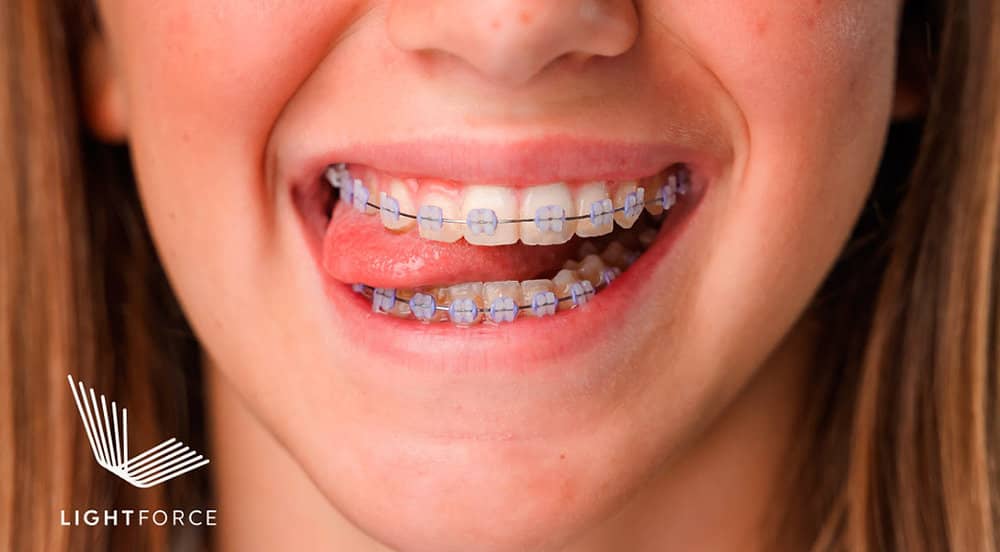
At our practice, we use advanced digital technology, and for selected patients that includes LightForce custom braces. These braces are designed specifically for the patient’s teeth, allowing for a high level of customization and treatment precision. That can be especially helpful in cases where fine control matters, which certainly includes many overbite corrections.
The point is not to use technology for its own sake. The point is to use the right tools to produce a better diagnosis, a more precise treatment plan, and a better result.
Growth Matters More Than Most Parents Realize
One of the most fascinating things about overbite treatment is how much timing can matter in children.
A child who is still growing gives us opportunities that simply do not exist later. If the lower jaw is positioned back, or if the facial pattern is contributing to the overbite, growth may allow us to influence the outcome in meaningful ways. That does not mean every young child needs early treatment. Many do not. But it does mean that early evaluation is important, because by the time a growth opportunity is missed, it cannot be recreated.
This is where parents often appreciate an experienced orthodontist. The real question is not simply, “Does my child need braces?” It is, “Is there something happening in growth that is worth addressing now, or is the smarter choice to wait?”
Both answers can be correct depending on the child. Good timing is one of the things that separates thoughtful orthodontics from formula orthodontics.
Overbite Treatment in Adults
Adults can absolutely have successful overbite treatment, and many do.
In fact, some of the most interesting overbite cases are in adults because they often come with a history. The patient may have had braces years ago. They may have restorations, crowns, implants, wear facets, gum recession, or changes in the bite caused by years of function. Their concerns may be cosmetic, but they are often also functional. Their dentist may be worried about wear. The patient may notice chipping. The bite may feel collapsed.
Adult treatment is rewarding because patients are usually highly motivated and appreciate the details. But it also requires honesty. In some adults, orthodontics can dramatically improve the bite and smile without surgery. In others, if the skeletal discrepancy is severe, orthodontics alone may improve the teeth while leaving the underlying jaw imbalance only partially corrected.
That brings us back to surgery.
When Is Surgery Part of the Conversation?
Most overbite patients do not need surgery. That is important to say clearly.
But surgery does need to be discussed in certain severe skeletal cases, especially in adults who are no longer growing. If the overbite is being driven primarily by jaw position rather than tooth position, and if the discrepancy is large enough, braces alone may not be able to fully correct the problem.
In those cases, orthodontics can sometimes camouflage the skeletal problem. That means we move the teeth into positions that improve the bite and appearance as much as possible without actually changing the jaw relationship. Camouflage can be a very good option in the right patient, especially when the discrepancy is moderate and the goals are realistic.
However, camouflage has limits. If the jaws themselves are significantly out of position, the only way to truly correct the skeletal relationship is with orthognathic surgery in combination with orthodontics. The braces align and prepare the teeth, the surgeon repositions the jaws, and then the bite is refined afterward.
This is not something I bring up casually or dramatically. It is simply part of giving patients a complete and honest understanding of their options. In a severe adult overbite with a retrusive lower jaw, for example, it would not be appropriate to pretend that braces alone can always create the same result as combined orthodontic-surgical treatment. They cannot.
An orthodontist should know when to reassure, when to monitor, when to treat conservatively, and when to explain that the underlying anatomy may require a broader solution.
Why Some Overbites Relapse
This is another issue patients find fascinating. They assume that once an overbite is corrected, it should stay corrected forever. In reality, retention and stability are more complicated than that.
Teeth want to move. Muscles exert pressure. Growth can continue, especially in subtle ways. Habits matter. Wear matters. The original facial pattern matters. If the original problem involved a strong skeletal component, that matters too.
This is why retention is so important. Retainers do not simply keep the teeth straight. They help preserve a complex correction that may involve torque, vertical control, arch coordination, and bite relationships.
When I finish an overbite case, I am not just thinking about how it looks the day the braces come off. I am thinking about what will help keep it healthy and stable years from now.
What Patients Usually Do Not Expect
One of the things patients often tell me after we have a real discussion about overbites is that they had no idea there was so much involved. They thought the question was just whether braces could pull the teeth into line.
But overbite treatment is really about understanding the architecture of the bite.
It is about how the teeth fit together, how they function, how they wear, how the jaws are related, how the face grows, and what kind of correction is actually stable and healthy. That is why I enjoy treating these cases so much. They are intellectually interesting, and when treated well, they can make a tremendous difference in a patient’s oral health and confidence.
If you or your child has been told there is an overbite, the most important first step is a careful orthodontic evaluation. Not all overbites are the same, and the treatment options depend entirely on what is causing the problem.
At our office, I take a comprehensive approach to diagnosis and treatment planning. I want patients and parents to understand not just what I recommend, but why. Sometimes that means braces. Sometimes it means aligners. Sometimes it means watching growth carefully. In more severe skeletal cases, it may mean discussing the difference between orthodontic camouflage and surgery.
That is what expert orthodontic care should do. It should not reduce everything to a generic label. It should explain the biology, the mechanics, the choices, and the long-term implications in a way that helps patients make informed decisions.
An overbite may seem like a simple problem on the surface, but it can tell us a great deal about how the teeth, jaws, and face are working together. When you understand that, orthodontics becomes much more interesting, and much more important, than most people ever realized.
If you are in Charlottesville and have questions about overbite treatment, we would be happy to help you understand your options.